PCB Project
Bio-BOSS: Blood Oxygen Spectral Sensor
Summary
bio-boss
- Created
- 26th Aug, 2025
- Updated
- 21st Oct, 2025
- License
- Public Domain
- Source
- OSHWLab
Description
Biosignal : Blood Oxygen Spectral Sensor
HemoEncephaloGraphy (HEG) Module made using MAX86141 Pulse Oximeter / Heart-Rate IC. Similar to the HEGduino V2 Project.
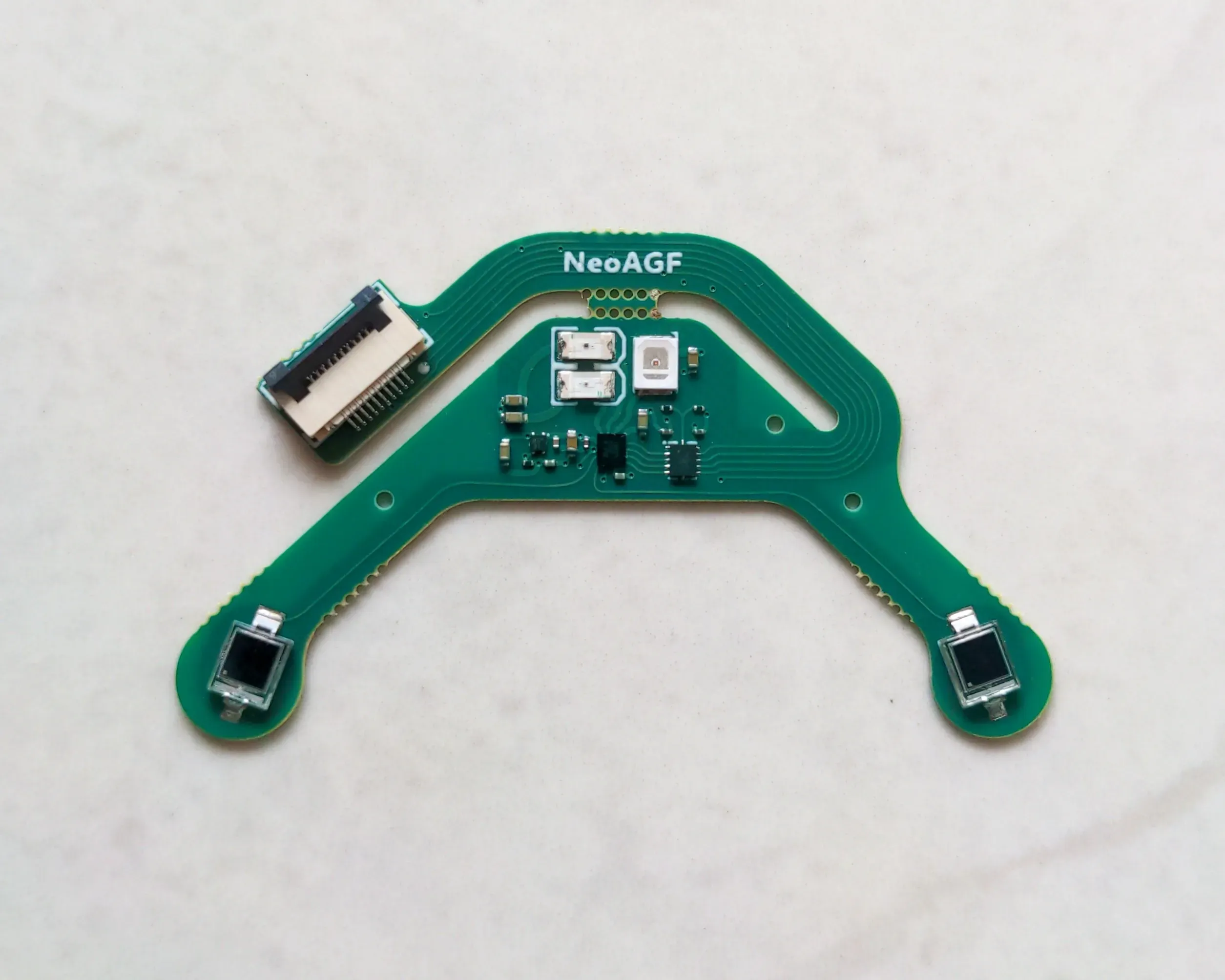
MAX86141 IC
MAX86141 is an integrated optical analog frontend with a 19 bit ADC and three 8bit DACs as LED drivers; and an SPI interface for MCU communication. Having inbuilt noise cancellation and ambient light rejection is a huge advantage.
Overall this IC allows us make a cost-effective design by reducing the number of unique components while also saving PCB real estate due to its tiny footprint.
Circuit:
- LDO regulator - to provide 1.8V required by the MAX86141
- Level Shifter - to translate voltage signals between a 3.3V MCU and 1.8V MAX86141
- 3x Light sources - 940nm IR, 850nm IR, 660nm Red LEDs
Fabrication:
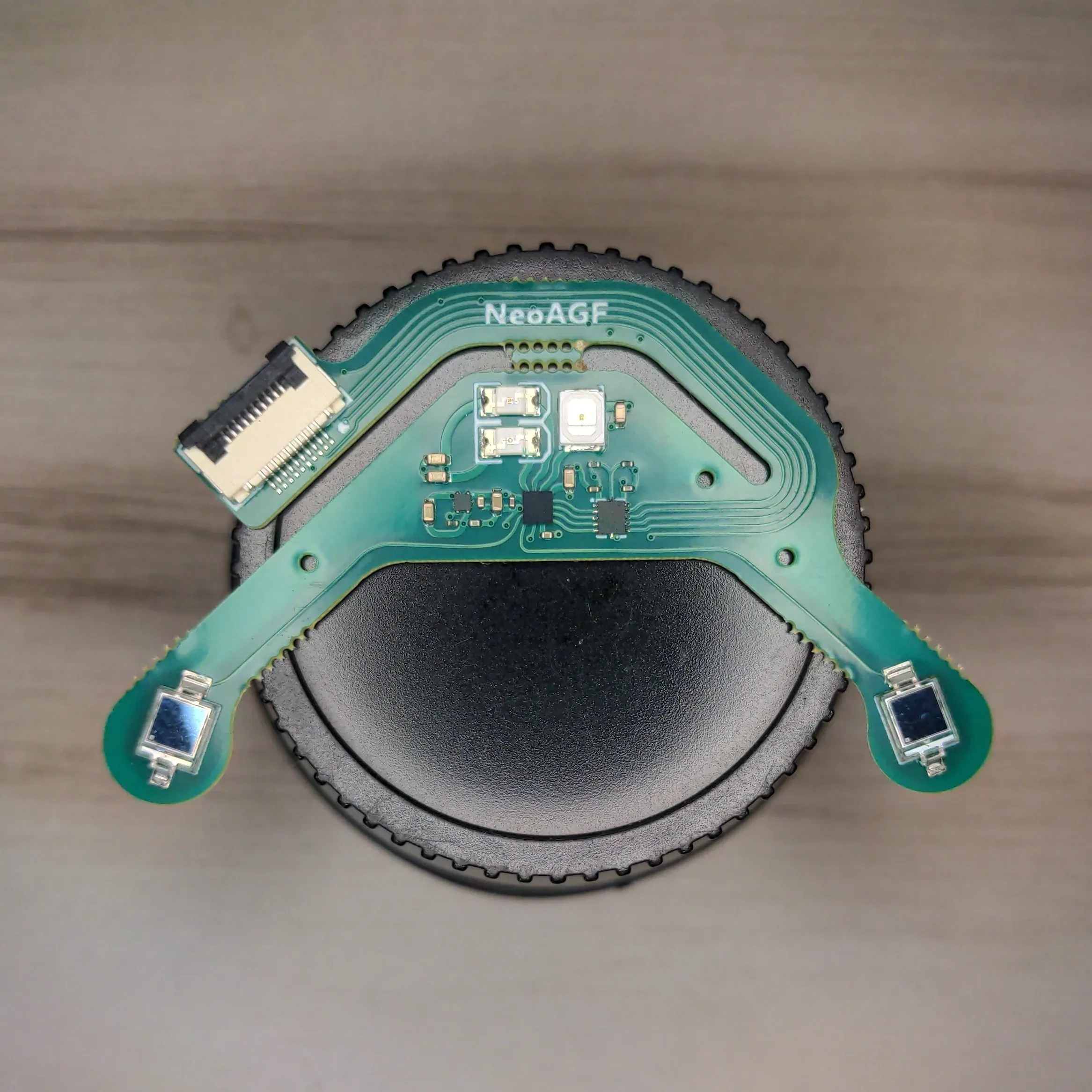
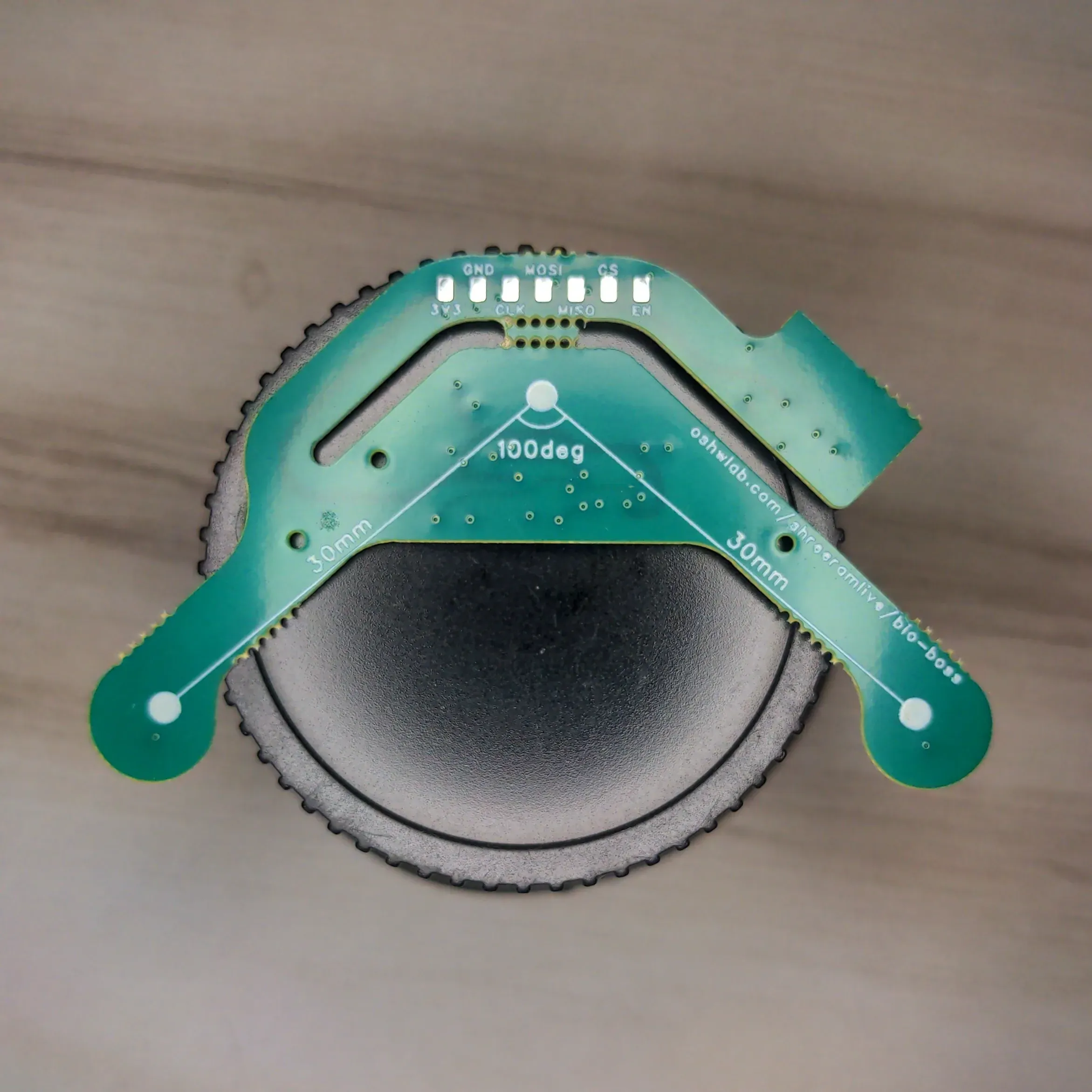
The board is designed to be made with 4 layer FR4 PCB of 0.6mm thickness. Components can be assembled with single side SMT assembly.
Connections:
| Function | Notes |
| 3.3V | Power supply |
| GND | Ground |
| CLK | SPI pin |
| MOSI | SPI pin |
| MISO | SPI pin |
| CS | SPI pin |
| EN | Enabled by default, Can be left unconnected. Pull LOW to disable 1.8V LDO |
Arduino Compatibility:
Library: joshbrew/MAX86141_Arduino
Basics of fNIRS
Functional Near-Infrared Spectroscopy (fNIRS) is an optical imaging technique, it is a safe method since it is non-invasive and doesn’t involve any ionizing radiations.
fNIRS - functional Near-Infrared Spectroscopy
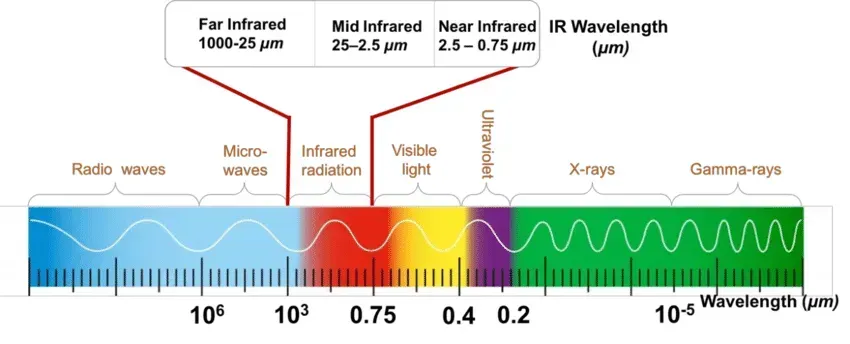
Optical Window - The near-infrared (NIR) window defines the range of wavelengths from 650 to 1350 nm where light has its maximum depth of penetration in tissue. -wiki
Biological tissues such as Skin, Skull and Cerebrospinal fluid are relatively transparent in the optical window. This range of wavelength is the least absorbed by water, proteins, lipids or collagens (that once again sums up the major components of biological tissues), so this allows NIR light to diffuse a few centimeters into the brain.
How it works and what it measures?
This technology can be used to measure localized hemoglobin concentrations in the brain. It is possible due to the different absorption wavelengths of the NIR light by oxygenated hemoglobin (HbO) and deoxygenated hemoglobin (HbR). So we can get HbO, HbR and total hemoglobin data (HbT).
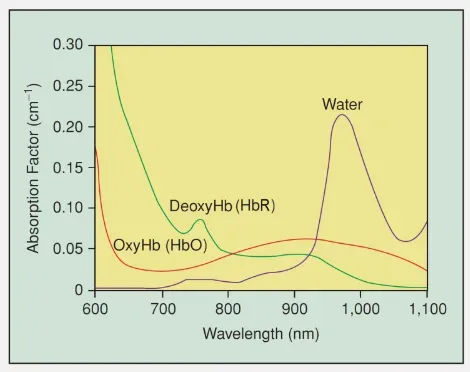
source: open_NIRS_docu_HardwareDesignNIRSModule.pdf
Then the light data can be interpreted to get valuable information such as blood oxygenation and volume. Using modified Beer-Lambert Law (mBLL) - learn more
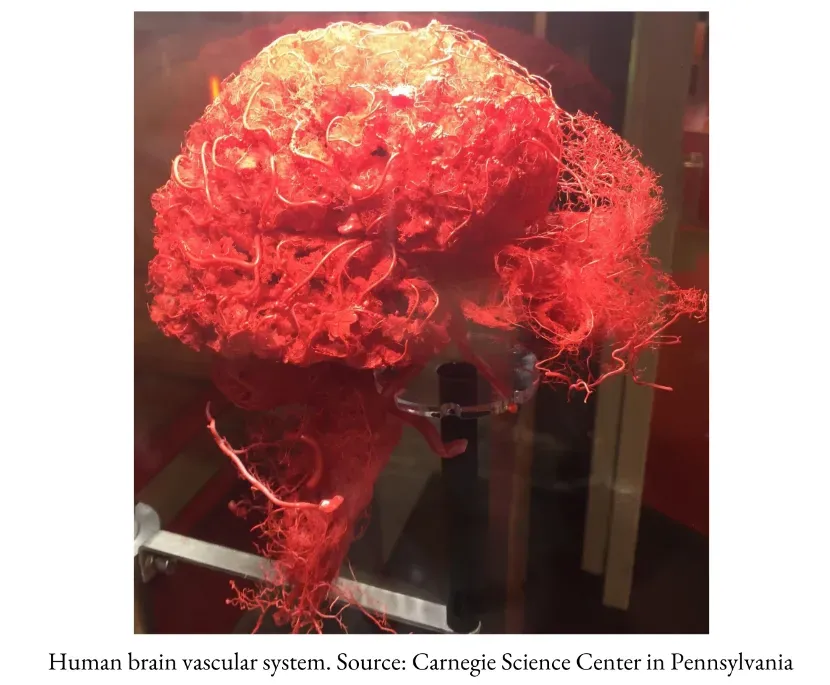
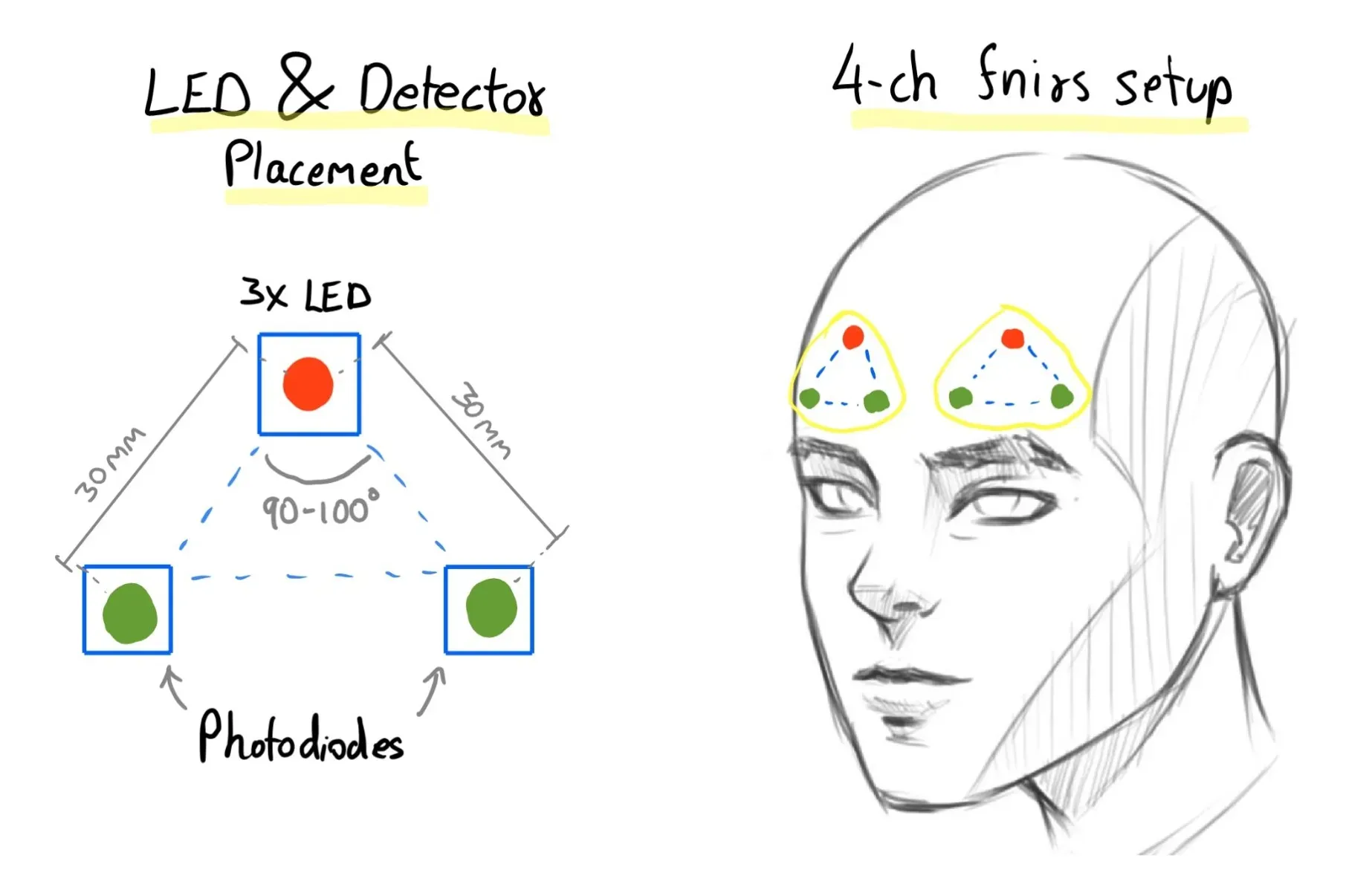
Optode Placement:
Optodes can contain a single source (source optode), a single detector (detector optode), or a source accompanied by a short-separation detector. We will be using the third type; LEDs as source and a Photodiode as detector with a separation of 30mm.
References:
- Open Source, Low Cost, Scalable fNIRS/HEG Whitepaper - Joshua Brewster - Github
- HEGduino V2 - A flexible FNIRS and blood-flow biofeedback Kit - Crowdsupply
- Modular open hardware for Near InfraRed Spectroscopy - OpenNIRS.org
- Biofeedback of Human Central Nervous System Activity using Radiation Detection - Patent 5995857

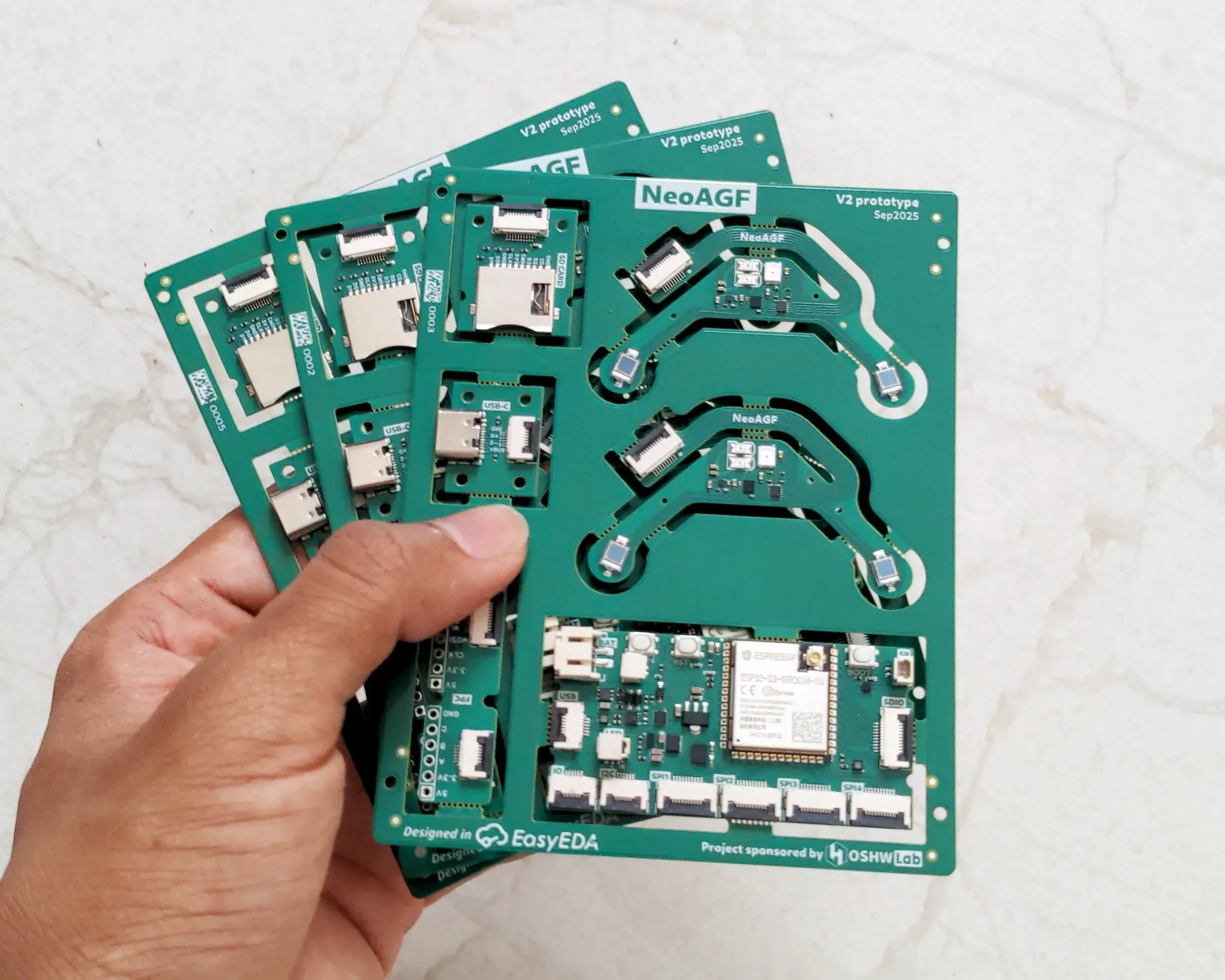
- This project's PCB and PCBA service was sponsored by the OSHWLAB Stars campaign.
- Prototype was completed in October 2025.